Wednesday, April 7, 2010
Claude Monet, the Water-Lilies, Paris and L'Orangerie
Monday, March 29, 2010
Stop and Smell the Flowers
Starting the conversation: What parts of Spring do you cherish most? How do you slow down and remember to smell the flowers?
Tuesday, March 16, 2010
Beauty Is ...
Lately, as I write, and rewrite, and rework my novel, I have thought much about beauty-- in stories, in relationships, in the way things look and feel, and the way words sound when read. But beauty and achieving it is not something easily done. Anyone with a blank canvas and a handful of brushes knows that beautiful art is not easily created. Anyone with a keyboard and a blank screen knows that excellent writing cannot quickly be hammered out. But somehow, beauty is ..."Beauty is not caused. It is." -Emily Dickinson
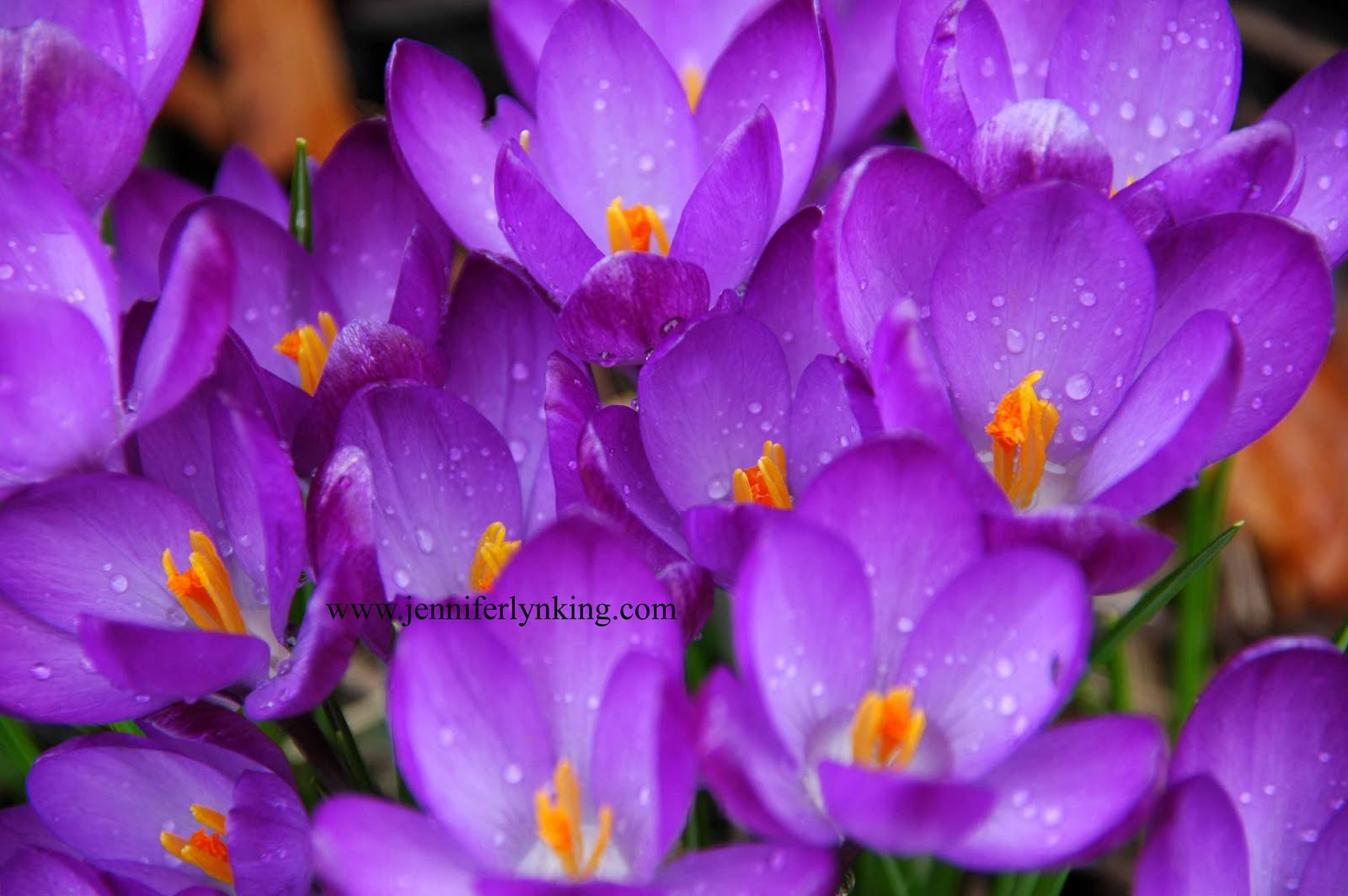
Often, I turn to photographs for inspiration. I thought I would share a few with you, flowers I photographed in our former gardens.
Beauty is ...
Monday, April 27, 2009
The Garden Fairies' Return

Even more exciting for me than the flowering is the return of the hummingbirds, my Garden Fairies. Yesterday, I spotted my first male Ruby-throated Hummingbird at one of my feeders. And, as every year’s first glance, I stared in shock and wide-eyed wonder at the tiny sparkler hovering about the gardens. Beautiful!

In the peak of their season here, our yard swarms with hummers, which I love more than can be described in words. They are magical to me, fantastic glimpses of impossibility overcome with beauty. I won’t go on and on – check out http://www.hummingbirds.net/ for migration routes, photographs of the different breeds, and every other hummingbird fact you could conjure into question. One amazement to me, as with the amazing migration of the Monarch butterflies, is the Ruby-throated Hummingbird’s migration—most of them apparently migrate to and from Central America by leaving at dusk and taking a nonstop five-hundred mile flight across the Gulf of Mexico. Incredible considering each hummer weighs less than five ounces! So, to these flitting miracles, I look forward to being dive-bombed while out in the yard in the early hours—won’t be long.
To set up your own hummingbird feeder, find one easy to take apart and clean, and with bee-guards at the ports. Mixing nectar is simple, and needs to be done about once a week: 4 parts water with 1 part sugar, heat water and stir in sugar, cool and add to feeder. Depending on the outdoor temperature, feeders need to be maintained regularly by cleaning (don’t use soap on the feeder), and replenishing the nectar.
‘Tis the season to enjoy the everyday miracles outdoors! Enjoy … JK
Monday, March 2, 2009
5 Great Ways to Experience Spring

a sweet reminder of Spring, last Spring in our yard
Spring happens to be my favorite season. Not for the wind and rain and cold and dark, but for the newness of it all. Rebirth. The Reawakening of everything brown that brings back the green. The verdant beauty waiting just beneath the surface of the brown sticks and rustling dead leaves. Renewal.
I once heard this: “If we live to be 100 years old, we will have only experienced Spring 100 times” … if we’re paying attention. That quote always brings me back to this season with wide eyes. In only weeks I’ll be looking out at flowers and hummingbirds and butterflies. By the way the deadened world looks now, it seems impossible. But it will come. Something bigger is at work, right before our eyes. Spring.
My life always fills up and brims over with busyness, so unless I am intentional I will miss this rebirth we call Spring. So, to help me remember to watch and be on the lookout for the miracle of Spring, I’m listing 5 Great Ways to Experience Spring. This year, I want to turn my busy days into the grand experience they can be, days that can be savored. Here are five simple ideas:
1. One time each day, pause and look—really look—at the landscape, and note what has changed from the day before.
2. Take a walk through someplace wild—it could be the backyard, or a park, or an open field. Not only see what is around, but feel it as well in fresh smells and popping colors floating on the breeze.
3. Plant some flowers. Pansies are cheery reminders of spring with their colorful faces and sweet disposition, but any flower will do. Try a pot for simplicity’s sake, or take on a more ambitious endeavor, but the process of growing something brings Spring near.
4. Stop and take notice of blooms as they unfurl their splendor for the world, and cut a bouquet to bring indoors. Tulips, daffodils, lily of the valley, peonies, iris … an endless parade of Spring beauties wait outside laden with fragrance to be enjoyed.
5. Pull out the camera and capture a photo or two of a Wow moment—that moment when you see something new and its beauty takes your breath away. Somehow, capturing something through a lens makes the experience richer, into one that can be shared.
Today I am ready for the reawakening of Spring. It is a new month, a new week, and a new day. A new season. I’m ready for the reawakening to occur within me.
This year, Spring arrives as it does every year, pushing out the brown and ushering in the green.
… Only 100 times …
Monday, January 26, 2009
To Delight in a Rose
The roses I’d like to share are no ordinary roses. These roses are … my favorites, which mean these rosebushes are ones which have withstood the tests and trials of time in my backyard garden in Zone 6 Southwest Ohio. It also means these beauties have outlasted one very feisty old dog and her tricks and three young men who constantly test the roses’ durability with soccer balls and the like. These roses, Jennifer’s favorite roses, are ones that, with enough abuse, can survive and flower beautifully in any other garden, too—including yours. Of course, I’m being funny, but it’s true—these roses I’m listing below are ones which have bloomed in profusion despite everything I do wrong. I hope the photographs I paste in bring you a slice of fragrant springtime …
Jeanne LaJoie: One of the most beautiful roses I have ever seen. The two in my garden, I bought at the clearance table at a local nursery one year. They have produced abundant blooms every June and then throughout each summer and into fall. Both top out at about six feet tall, and send up new canes for even more blooms each year. Technically, Jeanne LaJoie is a Miniature Climbing rose. Click here to find it online.


Monday, January 19, 2009
Enduring the Cold
It’s no wonder, then, that roses can hardly survive the cold, especially the beautiful ones, the hybrid teas. As I look outside now, our backyard gardens wear a thin veil of snow to protect them from the cold. Not enough, I’m afraid, to withstand the cold from the last week. We’ll find out if any survived in April …
Every year in November, I go about our fifty or so rosebushes and dress them for the winter. I am not a finicky gardener—in fact I’m probably more of a minimalist. With a normal garden shovel, I heave a mound of nearby soil over the base of most rosebushes, depending on what they are, to help them endure the cold.
For the shrub roses, like the very popular (and rightfully so) Knock Out, I don’t do a thing. In my experience, the Knock Out roses, along with all Rugosa roses and other shrub roses, can withstand a chainsaw pruning and bloom beautifully even still.
Knock Out shrub roseFor English roses (cultivated by the legendary David Austin), I use substantially more care. Not only do I hill dirt and mulch around the base of the plant, but I also gather bundles of spent Becky daisy stems and work them into the branches to the base.
English roses, Evelyn, Jubilee Celebration, Jude the Obscure, and RedouteFor floribundas and grandifloras, like Simply Marvelous, I do the same as for the English roses.
And finally, for the most demanding of all roses, the Hybrid Teas, I accommodate them with a bit more attention and ensure the dirt, mulch, stems, and grass straw all cover the base and first foot of each plant. I have to admit, I love Hybrid Tea blooms.
That leaves my handful of old roses to cover, which includes one of the old beauties, Baronne Prevost, whose visual beauty comes nowhere near her amazing fragrance. I treat the old roses for the winter basically the same as the floribundas.
Baronne Prevost, an old (1840's) hybrid perpetualClimbing roses, I don’t touch. Eden and New Dawn are favorites of mine that have survived every Ohio winter since I’ve planted them nearly ten years ago.
New Dawn, an unstoppable climbing beautyAs far as other annual maintenance for the roses, I leave the pruning and sealing of canes for late April, and fertilize with a liquid fertilizer that also incorporates systemic to keep diseases and pests at bay.
In truth, I always lose at least a few rosebushes each year. This year, I’ll probably lose more than a few—but in my gardens, as in the rest of life, nothing goes just the way I think it will. I figure the ones that die leave room to try a few new ones each spring. And as a result, every year I seem to find a new favorite.
Whatever time I spend tending to roses—one hour in fall preparing roses for winter, and one hour in spring whacking the dead canes off and fertilizing—I find the pleasure and joy I gain from having roses far outweighs the work. Walking amongst the lingering fragrance and petals floating about on the breeze, and cutting rose blooms for enjoyment indoors remains one of the greater pleasures of having a garden. And when the dew dazzles like diamonds atop a rosebud on a heady summer morning, maybe, I think, the experience is one of the greater pleasures of life and living.
Next week, I’ll plan to share a few photographs of the roses I enjoy the most.
And, on the 23rd (this Friday), I’m hosting my friend and fellow writer, Keri Wyatt Kent to talk about her latest book, entitled Rest. For a preview, visit her website at http://www.keriwyattkent.com/.
Finally, a huge thank you to the editors at the renowned author website, The Red Room, for giving me the honor of the "Red Room Rising Star." Visit their home page to see more: http://www.redroom.com/. Thank you!
Sunday, January 11, 2009
For Color-Starved Eyes
So … I’m sharing the beginning of the story of how our gardens came to be …
We moved into our home, an ordinary suburban house in Southwest Ohio, almost ten years ago from a tiny bungalow in New Orleans. During our time here, it’s possible we may have spent as much time outdoors as we have indoors. At least, so it seems. Even as toddlers, the boys stole every chance to escape out the back door to stomp in puddles. Instead of trying to corral them back inside, I joined the boys outside. I still have memories of their little legs running through the grass while they pushed plastic wheelbarrows loaded with brightly-colored children’s tools. The boys have spent years beside me on their knees building worm habitats while I weeded or worked in the gardens. Muddy or not, we all have a love for the backyard, and as a result, we have many gardens.
Our yard contained only a postage stamp-sized concrete patio and two spindly trees when we moved in. So, the first year we lived here, I spent hours chipping away at the sod in frugal attempts to transform our plain yard into something more interesting. The shape came slowly at first, laid out in crude shapes with garden hoses to represent the picture I had painted in my mind. As we built a couple of structures—a pergola and an arbor—the gardens started to move along. Plants came a little slower, but eventually, through pass-alongs from friends and plants found in the bargain bins at local garden centers, our backyard came to know some color … these four photographs follow our gardens through the change in seasons, from dull and lifeless in winter to rose-covered arbors in spring to the eye-popping rainbow of summer and the more muted tones of autumn.


Here’s to looking forward to a beautiful Spring!